Een rustige, praktische gids voor ouders en verzorgers die zich voorbereid willen voelen — en niet in paniek — tijdens elk afspraakje
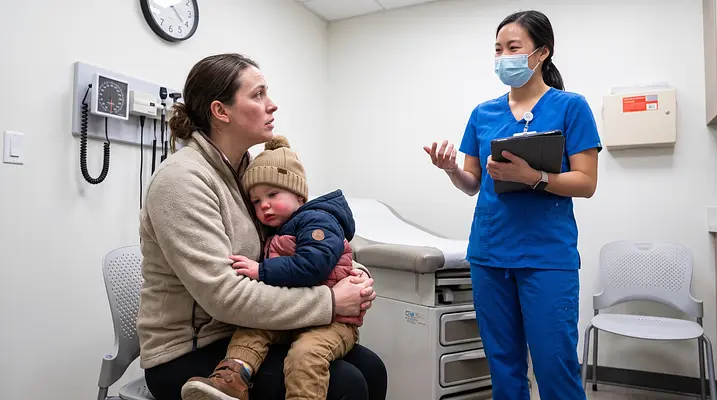
Daar sta je dan, eindelijk in de onderzoekskamer na wat het langste deel van je ochtend heeft gevoeld. Je kleintje is prikkelbaar, aanhankelijk en heeft koorts. De verpleegkundige komt binnen, glimlacht vriendelijk en vraagt: "Nou, wat is er allemaal aan de hand geweest?"
En plotseling… is je hoofd helemaal leeg.
Je weet dat er iets aan de hand is geweest — je hebt elke uitputtende minuut ervan meegemaakt — maar de details lopen door elkaar. Wanneer is de koorts begonnen? Was dat gistermiddag of de avond ervoor? Heeft het kind vandaag nog iets gegeten? Je worstelt je door een wazige tijdlijn terwijl je kind aan je mouw trekt.
Klinkt bekend? Je bent absoluut niet alleen. Dit overkomt de meest oplettende, liefdevolle verzorgers elke dag.
Het goede nieuws is dat je, met een beetje voorbereiding — en veel zelfcompassie — rustig, georganiseerd en goed voorbereid de kliniek binnen kunt lopen en precies kunt geven wat het zorgteam van je kind nodig heeft om te helpen. Dit artikel laat je zien hoe.
Waarom een duidelijk verhaal belangrijk is (en waarom het moeilijk is om dat te vertellen)
Als je kind ziek is, versmalt je hele wereld tot hen — hun comfort, hun temperatuur, hun kleine gezichtje. Je leeft op gebroken slaap, adrenaline en waarschijnlijk te weinig water. Precieze details onthouden onder die omstandigheden is geen persoonlijke tekortkoming; het is gewoon menselijk.
Maar hier is het ding: hoe duidelijker en sneller je kunt omschrijven wat er is gebeurd, hoe soepeler het afspraakje meestal verloopt. De kinderarts of zorgverlener probeert een beeld te vormen van wat er aan de hand is, en jij bent de belangrijkste bron van die informatie. Jij was erbij. Jij hebt elk uur van dit alles in de gaten gehouden. Jouw observaties doen er echt toe.
Het doel is niet om een medisch expert te worden. Het doel is gewoon om een zelfverzekerde, georganiseerde verteller te zijn.
Het "ziekteverhaal"-kader: wat je moet observeren en opschrijven
Denk aan jezelf als een zachte verslaggever die het belangrijkste nieuws van de wereld volgt: het welzijn van je kind. Probeer voordat je naar de kliniek gaat aantekeningen te maken — zelfs ruwe notities op je telefoon — over deze belangrijke onderdelen:
1. 🗓️ Wanneer is het begonnen?
Probeer het eerste moment te bepalen dat er iets niet klopte. Was je kind ongewoon stil tijdens het avondeten twee avonden geleden? Stond het midden in de nacht op met koorts? Zelfs een ruwe tijdlijn zoals "vanaf dinsdagavond begon het ongemak" is ongelooflijk behulpzaam.
2. 🌡️ Temperatuurwaarnemingen
Als je de temperatuur van je kind hebt gemeten, schrijf dan de uitslagen en de tijden op. Een patroon — zoals temperaturen die stijgen in de late namiddag — kan nuttige context bieden voor je zorgverlener. Vermeld welk type thermometer je gebruikte (anaal, oksel, mond, slaap), omdat je zorgverlener dat misschien vraagt.
Onthoud: Raadpleeg altijd je kinderarts of een gekwalificeerde zorgverlener over wat temperatuurwaarden voor je kind betekenen, en welke stappen je moet nemen. Vertrouw nooit op een blogbericht of app voor die begeleiding.
3. 😴 Gedrag en energieniveau
Slaapt je kind meer dan normaal? Speelt het nog een beetje, of is het ongewoon stil en lusteloos? Is het prikkelbaarder dan normaal als het ziek is? Deze gedragsobservaties zijn dingen die alleen jij kunt rapporteren, en ze geven een levendig beeld.
4. 🍽️ Eten en drinken
Heeft je kind vloeistoffen gedronken? Heeft het iets gegeten? Weigert het alles? Geschatte hoeveelheden zijn prima — niemand verwacht dat je elke slok opmeet. Alleen een algemeen beeld van "bijna niets gedronken" versus "af en toe kleine slokjes genomen" is echt nuttig.
5. 💤 Slaap
Is de slaap verstoord? Slaapt het kind meer dan normaal, of is het rusteloos en ongemakkelijk in de nacht? Slaapveranderingen zijn de moeite waard om op te merken.
6. 📋 Andere symptomen die je hebt opgemerkt
Denk aan het volledige beeld: Hoesten? Loopneus? Uitslag? Braken of diarree? Klachten over oorpijn, keelpijn of buikpijn? Schrijf alles op wat je hebt opgemerkt, zelfs dingen die onbelangrijk of ongerelateerd lijken. Laat de zorgverlener bepalen wat relevant is.
7. 💊 Medicijnen die zijn toegediend
Als er medicijnen zijn gegeven, schrijf dan wat, wanneer en hoeveel — zo nauwkeurig mogelijk. Je zorgverlener heeft deze informatie nodig. Als je twijfelt over de dosering of welke medicijnen geschikt zijn voor je kind, vraag dan altijd je kinderarts of apotheker — vertrouw nooit op een blog, app of goedbedoelende vriend voor specifieke medicatie- of doseringsadviezen.
8. 🤧 Recente blootstelling
Is je kind onlangs in contact geweest met iemand die ziek was? Is er iets gaande op school of in de kinderopvang? Deze context kan voor je zorgverlener zeer nuttig zijn.
Jouw 30-secondenscript (vul in de lege plekken)
Zodra je je aantekeningen hebt, kun je die samenvatten tot een korte, duidelijke openingszin. Hier is een eenvoudige sjabloon:
"[Naam kind] begon zich ziek te voelen op [dag/tijd]. De belangrijkste symptomen waren [noem 2–3 belangrijke symptomen]. De temperatuur lag rond [bereik], laatst gemeten [laatste uitslag] om [tijd]. Het heeft [omschrijving eten/drinken]. Ik heb [naam medicijn] gegeven om [tijden]. Wat mij het meest zorgen baart is [grootste zorg]."
Dat is het. Dertig seconden. Je hebt je zorgverlener een duidelijke kaart gegeven om mee te beginnen, en je hebt ook je grootste zorg genoemd — en dat is belangrijk. Jouw instinct als verzorger is geldig en verdient het om uitgesproken te worden.
Voorbereiden voordat je het huis verlaat
Een beetje voorbereiding helpt enorm, vooral als je al moe en gestrest bent. Hier zijn enkele zachte suggesties:
✅ Houd een lopende notitie bij
Vanaf het moment dat je kind zich ziek voelt, houd een eenvoudige lopende notitie bij op je telefoon. Je hoeft geen formeel document — zelfs een voice memo of een snelle tekst naar jezelf werkt. Noteer gewoon tijdstippen, temperaturen en alles opvallends zodra het gebeurt. Dat is veel makkelijker dan proberen gebeurtenissen achteraf uit je geheugen te reconstrueren in de onderzoekskamer.
✅ Verzamel belangrijke documenten
Als je kind relevante medische geschiedenis, allergieën of huidige medicijnen heeft, neem die informatie dan mee of zorg dat je het op je telefoon kunt raadplegen. Als je zorgverlener een patiëntportaal heeft, kijk of recente gegevens daar beschikbaar zijn.
✅ Schrijf je vragen op
Denk na over wat je het meest wilt weten of begrijpen aan het einde van het afspraakje. Schrijf die vragen op. Het is makkelijk om ze te vergeten als je er middenin zit, en er bestaat geen vraag die te klein is als het over je kind gaat.
✅ Pak een troosttas in
Voor je kind: een favoriet klein speeltje, een troostobject, een snack als het daarvoor in de stemming is, en een schone kledingset voor het geval dat. Voor jou: een fles water, een snack en je telefoonlader. Zorgen voor jezelf op kleine manieren helpt je rustig en aanwezig te blijven.
Samenwerken bij zorg door meerdere verzorgers
Veel kinderen worden verzorgd door meer dan één persoon — twee ouders, grootouders, een nanny, een kinderopvangmedewerker. Als een kind ziek is, kan dit snel ingewikkeld worden. Informatie gaat verloren bij overdrachten. De ene verzorger weet niet wat de ander al heeft gegeven. De stress stijgt.
Een paar eenvoudige gewoontes kunnen enorm helpen:
- Wijs een "zorglogboek" aan dat iedereen kan inzien. Dit kan een gedeelde notitie op je telefoon zijn, een groepsgesprek in een app of een specifieke app. Het belangrijkste is dat iedereen uit dezelfde bladzijde leest.
- Noteer medicijnen altijd direct nadat ze zijn gegeven — niet later, niet "zo meteen". Dit voorkomt per ongeluk dubbele dosering, wat een echt en serieus risico is. Als je ooit onzeker bent of een dosis al is gegeven, neem dan contact op met je kinderarts of apotheker voordat je er nog een geeft.
- Geef elke keer een korte mondelinge overdracht wanneer de zorg overgaat. Zelfs 60 seconden van "dit is wat er gebeurd is, dit is wat gegeven is en wanneer, dit is waar ik op let" kan veel verwarring voorkomen.
- Zorg dat iedereen het zorgplan kent — inclusief welke signalen of symptomen een telefoontje naar de arts of een bezoek aan spoedeisende hulp moeten opleveren.
Je zieke kind troosten thuis
Terwijl je wacht op een afspraak, of je kind verzorgt tussen bezoeken door, is het krachtigste wat je kunt bieden je rustige, vaste aanwezigheid. Kinderen halen enorme signalen van ons. Als wij bezorgd en paniekerig zijn, voelen zij dat. Als wij rustig en geruststellend zijn, voelen zij dat ook.
Enkele zachte troostideeën:
- Blijf dichtbij. Zieke kinderen willen vaak gewoon bij jou zijn. Laat ze op de bank rusten terwijl jij in de buurt bent, of kruip samen onder een deken met een rustig programma of luisterboek.
- Bied regelmatig en zachtjes vloeistoffen aan. Kleine slokjes, vaak, zijn vaak makkelijker dan grote hoeveelheden. Popsicles, verdunde sapjes en bouillon kunnen allemaal helpen. Als je zorgen hebt over hydratatie, neem dan contact op met de zorgverlener van je kind.
- Houd de omgeving rustig en comfortabel. Gedimd licht, zachte stemmen, knusse dekens. Verminder prikkels.
- Volg hun leiding. Sommige zieke kinderen willen slapen; sommige willen vastgehouden worden; sommige willen een rustige afleiding. Jij kent je kind het best.
- Bevestig hun gevoelens. "Ik weet dat je je beroerd voelt. Ik ben hier. We zullen goed voor je zorgen." Eenvoudige woorden, maar ze betekenen veel.
Voor vragen over troostmaatregelen, waarop je moet letten, of wanneer je zorg moet zoeken, raadpleeg altijd de kinderarts van je kind of een gekwalificeerde zorgverlener.
Zorg ook voor jezelf
Dit onderdeel wordt vaak overgeslagen, en dat zou echt niet moeten.
Zorgen voor een ziek kind is uitputtend — emotioneel, fysiek en mentaal. Het is toegestaan om moe, bezorgd en overweldigd te voelen. Die gevoelens maken je geen slechte ouder of verzorger; ze maken je een menselijke.
Een paar zachte herinneringen:
- Slaap als je kunt. Zelfs korte rustperiodes helpen.
- Eet iets. Het is makkelijk om dat te vergeten. Je hebt brandstof nodig om te functioneren.
- Vraag om hulp. Als iemand aanbiedt, zeg dan ja. Als niemand aanbiedt, vraag dan. Dit is geen teken van zwakte; het is een teken van wijsheid.
- Wees vriendelijk voor jezelf. Je doet je best in een moeilijke situatie. Dat is genoeg.
En als je je echt overweldigd, bezorgd of niet in staat voelt om ermee om te gaan, neem dan contact op met iemand die je vertrouwt — een vriend, familielid of een psycholoog. Ook jouw welzijn doet ertoe.
Wanneer je spoed- of noodzorg moet zoeken
Dit blogbericht gaat over georganiseerd en kalm blijven — maar het is belangrijk om duidelijk te benoemen: als je ooit denkt dat je kind dringende aandacht nodig heeft, vertrouw dat instinct en handel daarop.
Wacht niet op een gepland afspraakje als je kind tekenen laat die jou zorgen baren. Bel het kantoor van je kinderarts, gebruik hun buiten-kantoor-uren nummer, of ga naar spoedeisende hulp of de noodzaal als nodig. Jij kent je kind. Als er iets niet goed voelt, haal hulp.
Raadpleeg altijd je kinderarts of een gekwalificeerde zorgverlener voor advies over symptomen, waarschuwingssignalen, medicijnen, dosering en behandelbeslissingen. Dit blogbericht kan dat advies niet geven en doet dat ook niet.
Een korte samenvatting: jouw zorgverlof-voorbereidingschecklist
Voordat je naar de kliniek gaat, loop deze snelle lijst door:
- [ ] Tijdlijn genoteerd: wanneer de symptomen begonnen
- [ ] Temperatuurlogboek: uitslagen, tijden, type thermometer
- [ ] Gedrags- en energieobservaties opgeschreven
- [ ] Samenvatting eten en drinken genoteerd
- [ ] Slaapveranderingen genoteerd
- [ ] Alle andere symptomen opgesomd
- [ ] Medicijnen genoteerd: wat, wanneer, hoeveel
- [ ] Recente blootstelling genoteerd
- [ ] Jouw vragen opgeschreven
- [ ] Troosttas ingepakt voor je kind
- [ ] Iets voor jezelf (water, snack, lader)
📋 Disclaimer
Dit blogbericht is uitsluitend bedoeld voor algemene educatieve en informatieve doeleinden. Het is geen medisch advies en geen vervanging voor de begeleiding van een gekwalificeerde kinderarts of zorgverlener. Niets in dit bericht mag worden gebruikt om diagnoses te stellen, te behandelen of medische beslissingen te nemen over je kind. Raadpleeg altijd de kinderarts van je kind of een gekwalificeerde zorgverlener met vragen over symptomen, medicijnen, dosering, behandeling of de gezondheid van je kind. Als je denkt dat je kind spoed- of noodzorg nodig heeft, zoek die dan onmiddellijk.
🌟 Nog een hulpmiddel om je georganiseerd te houden: Fever Whiz
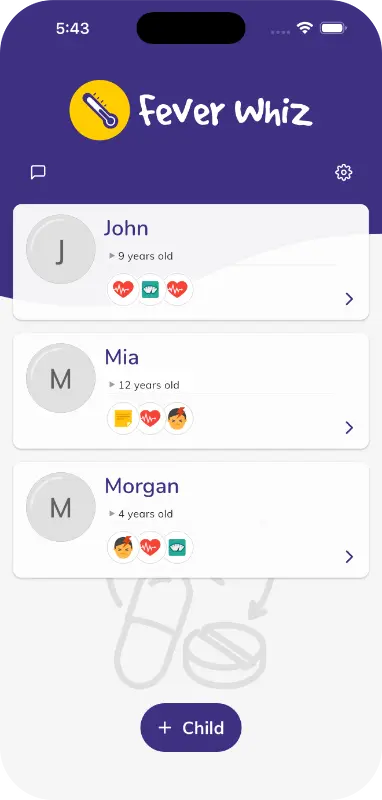
Als je op zoek bent naar een eenvoudige, betrouwbare manier om al deze informatie op één plek te bewaren, overweeg dan Fever Whiz te proberen — een gratis tracker voor kindermedicatie, koorts en symptomen, ontworpen voor ouders en verzorgers zoals jij.
Met Fever Whiz kun je:
- 📝 Elke temperatuur, medicatiedosis en symptoom vastleggen zodra het gebeurt, zodat niets vergeten wordt
- ⏰ Aangepaste en slimme herinneringen instellen om je zorg zonder mentale belasting op tijd te geven
- 📊 Trends visualiseren met makkelijk leesbare grafieken zodat je patronen in één oogopslag ziet
- 📁 Belangrijke medische documenten opslaan op één georganiseerde, toegankelijke plek
- 👨👩👧 Zorgnotities en een lijst met verzorgers bijhouden, en in real time synchroniseren met iedereen die voor je kind zorgt — zodat alle verzorgers altijd op dezelfde hoogte zijn
Fever Whiz is een prive-opslag- en organisatietool — geen medisch apparaat — en geeft geen medisch advies of diagnose. Beschouw het als je rustige, georganiseerde copiloot: die je helpt de informatie te verzamelen die het zorgteam van je kind nodig heeft, zodat je met vertrouwen de kliniek binnen kunt lopen om je ziekteverhaal te vertellen.
Je kunt dit. En je kind heeft geluk dat iemand zo veel om hem of haar geeft. 💛